
Ultra Merge Racing
HUAMING WANGCasual
4.2108.00 Reviews
- Version
- 1.2.1
- Installs
- 100.00K
- Age Rating
- Everyone
Screenshots
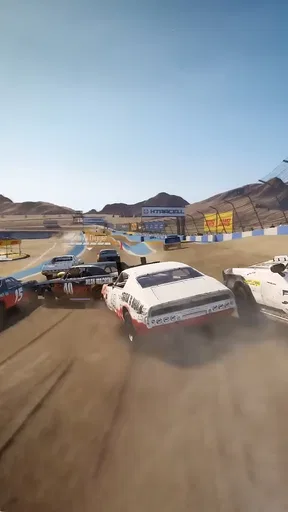

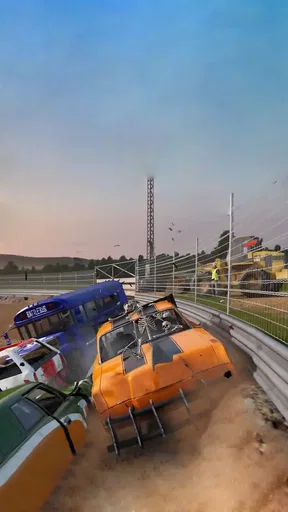


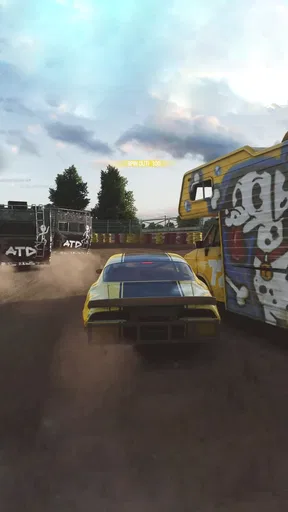

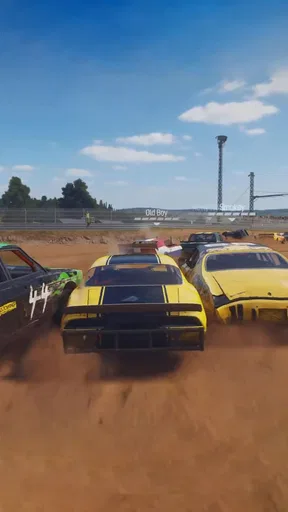
Our Review of Ultra Merge Racing
 Analysis by Appyee
I spent time with Ultra Merge Racing to see whether its central idea can hold attention beyond a few quick races. It is a free casual game from HUAMING WANG, built around combining car parts and using the resulting vehicles in championship-focused racing. That sounds simple, and the first sessions are simple in the best way: the game is easy to understand, quick to start, and light enough to fit into small gaps in the day.
My more important question was what happens after the initial curiosity wears off. Plenty of merge games feel satisfying while the board is full of obvious combinations, while plenty of racing games feel exciting until the controls become repetitive. This one sits between those two styles. Its appeal comes from switching between preparation and competition, but that same loop can become familiar if you want deep driving simulation or a large strategic system.
The game is rated for Everyone, and I found the presentation approachable rather than intimidating. It does not demand racing knowledge before you begin. If you enjoy casual progression, collecting better components, and seeing a vehicle improve through repeated decisions, it has a welcoming first week. If you are looking for realistic handling, detailed tuning, or a serious multiplayer championship, you should adjust your expectations before installing it.
Why the first week feels so accessible
The strongest part of the opening experience is how quickly the basic relationship between merging and racing becomes clear. I do not need a long explanation to understand that combining parts is preparation for the next challenge. The loop gives each action a visible purpose: I am not merging simply to clear space; I am trying to create a more capable car before returning to the track.
That connection makes the early sessions more engaging than a merge board with no meaningful destination. A short play period can include a few combinations, a decision about which improvement matters most, and a race that tests the result. Even when the race itself is not especially demanding, the anticipation created by the preparation phase gives the session a pleasant rhythm.
For a newcomer, I recommend resisting the urge to merge every available item immediately. The better habit is to look at the board first and consider which combination will open the most useful space or move you closer to a stronger part. This is a small decision, but it prevents the opening game from becoming a series of automatic taps. The merge phase is at its best when I treat it as planning rather than housekeeping.
The racing side also benefits from this accessibility. I can approach it as a casual reward for preparation instead of needing to master complicated controls. That makes the game suitable for short breaks, waiting rooms, or a relaxed evening when I want interaction without a steep learning curve. The trade-off is that experienced racing fans may find the driving layer too light. The game’s identity is not built around precise cornering or technical vehicle simulation.
During an ordinary day, I can imagine opening it while waiting for a train, making a few useful combinations, and completing a race before putting the phone away. That scenario works because the game does not require a long uninterrupted commitment to feel worthwhile. It is also a good fit for someone who likes checking progress several times rather than sitting down for a single extended campaign.
The early satisfaction comes from visible improvement. A basic part becomes something more valuable, and the car gradually feels connected to the choices I have made. That sense of ownership is more effective than simply receiving an upgrade from a menu because I have participated in creating it. The game does not need a complicated story to make that progression understandable.
Its audience is helped by the free entry point. I can try the central loop without treating the installation as a major commitment. The game has reached over one hundred thousand installs, while its average rating is 4.2 from more than eight hundred ratings. Those figures suggest a meaningful audience and generally positive reception, though they do not replace personal testing; the experience still depends heavily on whether merging and light racing are the kind of repetition I enjoy.
The current version is 1.2.1, and it runs on Android 8.0 or later. That compatibility makes it practical for people who do not use a recent phone, although smoothness can still depend on the individual device. I would check that my phone has enough free space and that notifications will not interrupt play, especially if I prefer using the game during short breaks.
What I learned by playing instead of rushing
One useful approach is to separate “progress” from “activity.” A full board can make me feel busy, but not every merge is equally valuable. I get better results when I pause after receiving new parts, identify the combinations that are closest to completion, and avoid spending everything simply because a merge is available. This makes the preparation stage feel more deliberate and reduces the sense that the game is playing itself.
I also found it helpful to judge a new part by how it changes my next race, not only by its apparent level. A component that completes a useful chain may be more satisfying than a single upgrade that leaves the rest of the board awkwardly arranged. This is the kind of small trade-off that gives the casual format some texture without turning it into a demanding strategy game.
Another practical tip is to use racing as a check on my decisions. If I repeatedly prepare the same way but the results feel unchanged, that is a sign that I am merging mechanically. Returning to the board with a specific racing goal—such as improving the next vehicle rather than merely clearing items—keeps the two halves connected. It also helps reveal whether I am genuinely enjoying the loop or just chasing the next visual upgrade.
Whether the loop survives from month to month
The first week is carried by discovery. I am learning how the parts relate to the cars, how quickly progress appears, and how much racing I want between merge sessions. After that, the game has to earn its place through routine. In my view, its recurring value depends less on surprise and more on whether I enjoy the calm cycle of making small improvements.
For the right player, that cycle can be durable. Casual games often work because they provide a dependable activity rather than a constantly changing one. Ultra Merge Racing can serve that role when I want a low-pressure game with a clear short-term objective. I can return, make a few choices, race, and leave without needing to remember a complicated plot or rebuild a large mental model.
However, its month-to-month appeal is more limited for players who need frequent novelty. Once the merge decisions become familiar, the main reward shifts from discovery to accumulation. If I do not care about gradually improving cars, the loop may start to feel like repeating the same preparation for another race. That is not a defect for a casual audience, but it is an important boundary.
The game compares favorably with a purely decorative merge title because the racing context gives upgrades a reason to exist. It also feels less demanding than a conventional racing game, where success may depend on timing, track knowledge, or detailed control. The compromise is clear: I get more purpose than in a simple merge toy, but less driving depth than in a dedicated racer.
It is also different from a traditional idle game. I am not simply watching numbers rise while doing nothing. The merge choices provide hands-on interaction, and the race gives me a moment to see the result. At the same time, anyone expecting a broad management simulation with extensive customization may find the structure too narrow. The game’s strength is its focused loop, not the number of separate systems surrounding it.
For long-term use, I would treat it as a companion game rather than my only game. It works well between more demanding activities because it offers a resettable, low-stress session. I would not choose it as my main title if I wanted ranked competition, deep car statistics, or a constantly expanding narrative. Its recurring value is strongest when the player enjoys modest progress and does not need every session to feel dramatically different.
Who is likely to keep it installed
I would recommend it to someone who likes combining objects but wants those combinations to lead toward a recognizable goal. It is also a sensible choice for a casual player who enjoys cars but does not want a realistic simulator. Families and younger players may appreciate the Everyone rating and straightforward concept, although an adult should still decide whether the game suits a particular child’s preferences and play habits.
I would be more cautious recommending it to a competitive racer. If your enjoyment comes from shaving time off a lap, learning advanced lines, or tuning a car with precision, this is probably not the right destination. The same applies to players who dislike repeated resource decisions. The merge board is not a brief introduction that disappears; it is central to the game, so avoiding that interaction is not really possible.
It may also disappoint people who want a large social experience. The appeal here is personal progression through parts and vehicles, not the feeling of joining a busy racing community. Someone seeking direct competition with friends would likely be happier with a game designed around multiplayer interaction rather than this compact merge-and-race format.
The maintenance burden behind casual convenience
A major advantage is that the game is easy to maintain as a habit. I do not need to reserve a long block of time, memorize a complex control scheme, or keep a detailed plan between sessions. That makes it less demanding than many racing games and easier to revisit than a story-heavy title. A few minutes can still feel complete if I finish a useful merge and take part in a race.
The hidden cost is attention. A game can be technically convenient while still asking me to make the same kind of decision repeatedly. If I open it out of habit without a clear intention, I can quickly slip into tapping through familiar actions. My best routine is to play in small, purposeful sessions: improve one area, test the result, and stop when the next action feels like simple repetition.
That approach protects the game from becoming background noise. It also makes the progression easier to judge. If a session gives me a meaningful choice, I leave satisfied. If I am only clearing the board because it is there, the game is no longer adding much to my day. This is a useful distinction for anyone deciding whether the app deserves permanent storage rather than a short trial.
Because it is free, the practical commitment is low. I can install it, learn the loop, and decide whether it fits my routine without paying upfront. Still, “free” does not automatically mean frictionless. I would pay attention to how often the game asks me to wait, repeat an action, or return later, because those interruptions affect whether the casual format feels relaxing or merely stretched out.
The best maintenance strategy is to keep expectations modest. I would not measure it against a full console-style racer. I would measure it against the few minutes I have available and ask whether combining parts and racing gives me a better break than scrolling through another feed. In that comparison, it has a clear purpose, especially for players who enjoy progress they can see immediately.
Where fatigue begins to appear
The main source of fatigue is repetition between decision and payoff. At first, every better part feels like a discovery. Later, I already understand the basic objective, so the same sequence can lose some energy. The game remains pleasant, but pleasant is not the same as compelling. I would expect the novelty to fade faster for players who have already played many merge games.
The second source is the balance between the board and the race. If the merge phase starts to feel like a chore, the race may not be substantial enough to compensate. Conversely, if the racing outcome feels too detached from my choices, merging loses its purpose. The game works best when both halves feel connected; any perceived gap between preparation and payoff makes the loop less satisfying.
There is also a risk of overestimating the depth offered by the car theme. The presence of vehicles and championships creates a stronger identity than a generic merge board, but it does not automatically make the game a detailed automotive experience. I would install it for the combination of light racing and merging, not for realistic engineering, extensive vehicle knowledge, or serious competitive driving.
To reduce fatigue, I would avoid forcing long sessions. The format is naturally suited to stopping after a few meaningful actions. Trying to grind through the same cycle for an extended period may expose its limited variety more quickly. Short sessions preserve the pleasant feeling of progress and make it easier to return later without feeling that the game has become another obligation.
Another useful test is to remove the game for a few days and see what I miss. If I miss the small satisfaction of building a better car, it has earned a place in my routine. If I only miss the automatic tapping, that is a warning that the habit is stronger than the enjoyment. This is especially relevant for a free casual game, where reinstalling later carries little risk.
My long-term verdict
After the first-week excitement settles, Ultra Merge Racing remains a pleasant choice for a specific kind of player: someone who wants a free, approachable casual game that joins merge-based progression with light racing. Its best quality is the clear relationship between preparing a vehicle and taking it into competition. That gives ordinary combinations a little more purpose than they would have on their own.
I do not think it is the right replacement for a serious racing game, and I would not choose it for deep strategy or constant novelty. Its long-term value depends on accepting a focused loop and enjoying gradual improvement. Players who need major changes from session to session may run out of reasons to return, while players who like dependable short activities can keep finding value in the routine.
My recommendation is to approach it as a small daily or occasional game, not as an all-day destination. Use the merge board thoughtfully, let each race test the preparation, and stop before repetition turns into fatigue. That rhythm makes the game feel more rewarding and makes its limitations easier to live with.
With a 4.2 average and more than one hundred thousand installs, it has clearly attracted a sizeable casual audience, and my experience explains why: the premise is easy to grasp, the entry barrier is low, and the car theme gives the merge loop a useful direction. It earns lasting space on my phone only when I want relaxed progress rather than demanding competition. For that purpose, it is a solid recommendation; for anything more ambitious, I would look elsewhere.
Verdict
Strengths of Ultra Merge Racing
- Fast-paced races are easy to start, even for casual players.
- Vehicle merging adds a simple strategic layer to standard racing gameplay.
- Short events work well for quick play sessions.
- Bright visuals make the cars and tracks easy to follow.
- Progression gives you reasons to keep upgrading your garage.
Limitations of Ultra Merge Racing
- Repeated races can feel similar after extended play.
- Higher upgrades may require considerable grinding.
- Touch controls can feel imprecise during hectic turns.
- The game may become less rewarding without regular upgrades.
- Performance can vary on older phones or budget devices.
Similar Picks in This Category
View All
My Talking Angela
Outfit7 Limited4.2

My Talking Tom
Outfit7 Limited4.3

Pou
Zakeh4.2

My Talking Tom 2: Pet Game
Outfit7 Limited4.3

Candy Crush Saga
King4.6

Bridge Race
Supersonic Studios LTD4.1
Frequently Asked Questions
What is Ultra Merge Racing, and how does the gameplay work?
Ultra Merge Racing is a casual racing game built around combining or merging vehicles to create stronger, faster cars. Instead of relying only on traditional driving controls, you typically improve your garage by merging matching vehicles, unlocking upgrades, and using them in races or challenges. The gameplay is easy to understand, making it suitable for short sessions, although progression becomes more focused on strategic upgrades over time.
Can Ultra Merge Racing be played offline?
Ultra Merge Racing may allow some features to work without a constant internet connection, such as basic vehicle management or previously available gameplay content. However, online access can still be required for advertisements, cloud-related functions, special events, updates, leaderboards, or in-app purchases. If you plan to play while traveling, it is best to test the game offline first because availability may vary depending on the version installed.
Is Ultra Merge Racing free to download and play?
Ultra Merge Racing is generally available as a free download, but free access does not necessarily mean that every feature is completely unrestricted. The game may include optional in-app purchases for currency, vehicles, boosts, or faster progress. Advertisements can also appear during gameplay, sometimes offering rewards after viewing them. You can usually progress without spending money, although patience may be needed for upgrades and unlocks.
Does Ultra Merge Racing contain ads or in-app purchases?
Yes, players should expect Ultra Merge Racing to potentially include advertising and optional in-app purchases. Ads may be displayed between activities or offered in exchange for bonuses, while purchases can provide extra currency, premium items, or progression advantages. These features are not always necessary to enjoy the core game, but younger players should use device purchase restrictions, and everyone should review the store listing before downloading.
What devices are compatible with Ultra Merge Racing?
Compatibility depends on the specific Android or iOS version of Ultra Merge Racing and the requirements listed on the relevant app store page. In general, the game should run on relatively recent smartphones and tablets, but older devices may experience slower loading, reduced performance, or limited support. Before installing, check the required operating-system version, available storage, developer information, and recent user reviews for device-specific problems.
Play our best games!


